Wednesday, January 28, 2015

A Poem: 73 Seconds

[Wrote this in 1996, 10 years after the Challenger Accident.  It's one of those "Where were you when..." moments that captures and defines a generation.  I'm glad we haven't had one since 9/11. It's annoying, I work with people now who weren't even thought of when we lost Challenger.  It makes me feel old.]

73 Seconds

73 seconds seems so little
to shackle a country to its soil.
So little for a fraction
of a machine to freeze,
to thaw, to expand, to explode.
Barely a minute goes by, 
The Lightship by Atilla Hejja
http://www.usmilitaryart.com/the_space_shuttle.htm
dreams made real while feeling 
3 G's escaping Nature's 
forces.  The Challenger was caught,
for those few moments, by the
cold January morning, by the
cameras of the media, my the 
minds of every dreamer. 

This dreamer remembers,
being called away from a 4th grade class,
led to a tornado shelter, to a TV, 
to the replays, tragic replays.
No catharsis from the endless
chorus of reporters
only questions of why? 

How to explain the end of a dream, to
schools filled with students, to 
witness a death not just of 7,
but of a minute part of each of us.
How to come home, staring at the news,
hour after hour, counting the seconds,
and feel the nation stop       and take a breath
to find what it had lost. 

Sunday, January 25, 2015

Ben & Jerry's, Bob Dylan, Bill Cosby

My opinion on celebrities being involved in politics (or anything else) is that their work on the field, or on stage, or on screen, or in the recording studio, is absolutely independent of the celebrity in question. I absolutely love folk music, and Bob Dylan, and groups like Coldplay and The Decemberists, but they're all liberals and some have actively campaigned for the Democrat party. I don't care... I will listen to them anyway, even sing (in Peter Paul and Mary's case) anti-war songs and songs about peace and brotherhood and all that, because the work of art is separate from the often current political arena. (There are a couple of exceptions, those that gush politics. I loved John Mayer's first mainstream album, but then his album quality went downhill and his third was almost exclusively anti-Bush, so....)

But that doesn't apply just to singers. I've had people tell me they won't eat Ben & Jerry's ice cream because they believe in Gay rights. Good... more for me to eat. If the product they make is superior in quality (not to mention delicious), they could fornicate with goats and I wouldn't care.

Case in point... Consider Bill Cosby. Let's assume that everything that all these women have said are true about him, and he has an uncontrollable desire to sexually assault drugged dates. And obviously he hasn't handled it well, and he should retire and get out of the limelight. Now, go back and watch episodes of the Cosby Show, or his stand up routines. Hilarious! Insightful! Masterful work! To me, his art is separate from him as a person. And years from now, after he dies and everything is forgiven (which usually happens), the issues he faces now will be an asterisk (although a damning one) on his life, but people will still gush about how he has changed their lives.

Because in the end, I don't care about the politics, about who is married to whom and who voted for Obama and who didn't.  I really don't even care about the actions that people did in the past (although it doesn't speak well for the people involved, and it does hurt their effect on people.)  Imagine all the young people who, in the 1960's and 70's, aspired to be a running back just like O.J. Simpson.  How many running backs, some of whom are now probably hold records at colleges and maybe in Halls of Fame someplace, looked up to Simpson as a role model and emulated his style of play on the field? The fact that O.J. (probably) killed his ex-wife and is now in jail for robbery doesn't detract from the positive effect his football career had on other people.  We watch the Naked Gun movie with Leslie Neilsen and laugh, even though Simpson is the comedy sidekick.

It's what effects me that I care about.  It's the times when we sat in the living room of our Oklahoma City house and watched Bill Cosby Himself on HBO and laughed so hard that we couldn't eat the dinners on the television trays.  It's about the time when, alone at Georgia College, the music of Peter Paul and Mary spoke to me, even though they were liberal activists (and I going to meetings of the College Republicans), and in past years Peter Yarrow was convicted of making sexual advanced toward a then 14 year old girl (he didn't know it at the time and was later pardoned by Carter).  It's about the amazing taste of Ben & Jerry's ice cream, especially the caramel core flavor with the rich caramel cream right through the center.... so good!!

I understand the idea behind not buying something because you don't believe in the same things as the maker, to underscore some point by affecting them financially.  I guess to me it's more about my happiness (short term or otherwise) than some statement I might make by not buying something. I enjoy the ice cream, I have cravings for Chick-fil-a's Milkshakes (usually on a Sunday), I find music that I like, even though their political beliefs are different... it doesn't matter to me.  Would we have the Mona Lisa torn down and destroyed because of Leonardo da Vinci's supposed erotic relationships with his male students?  Do we decry the works of Lewis Carroll because his known attraction to little girls? Of course, these examples are in the past.  Something tells me that, years from now, when Bill Cosby is years deceased, and the accusations have long been silenced with money, someone will find his comedic works languishing on Youtube, and they will laugh, and he will be treasured once again.  Is it right? I don't know.  But I do know that his performances are worth keeping, outside of whatever he himself has done.  Let us praise the work, even while the artist is punished.  Let us see the beauty in a song or a painting, even if we don't agree with those that made it.

Thursday, January 15, 2015

Book Review: Safehold by David Weber

It is truly an astonishing sensation to be delivered into the playground of someone's mind.  To watch as the person takes the dough, shapes a world, creates everything in that world, molds it into existence.  In essence, he is emulating God.  I know I've used that idea many times, and it is no more true than reading David Weber's Safehold Series.  The first book is titled Off Armageddon Reef.  I actually purchased the audiobook a few years ago and just sat it on my shelf, never really getting around to it.  It languished there, moving from shelf to shelf just to get it out of the way of other books I collected and haven't read yet.  And then last year, when I needed something to keep me awake as I drove to Dallas, Texas to an interview, to begin a new chapter in my life, I brought along the 25 CD set and immersed myself in the scenery of the interstate, and the scenery of Safehold.

Briefly, Safehold is the last remaining planet that is home to the Human Race. Destroyed by an alien race called the Gbaba, who could detect any technological power sources coming from any planet mankind should try and hide in, the Terran Federation decided that the only way to survive was to create a world where technology would be non-existent.  In other words, mankind would be put back into medieval times.  In order to keep things this way for the centuries needed to make sure the alien race would leave Terran space, the creators of this world made a religion (with themselves as Gods and Archangels) that specifically forbid innovation.  It is to this world that Merlin Athrawes awakes from a 900 year old hibernation.  He becomes, basically, Martin Luther, and challenges the Church of God Awaiting, albeit more subtly. 

As I said, Safehold is David Weber's playground.  He has written many more novels that take place in other worlds, in other universes, with other authors, but this one he's written alone, and I get the feeling that this world is his to become a Clockmaker God.  In other words, he created Safehold, with the rules and religion and people and circumstances, and then he lets it run.  The action comes as he sees it, as would happen naturally.  The conversations and innovations come slowly, over time, and he's done a magnificent job so far.  There are currently 7 books, with book 8 coming out September 8th, 2015. I can't wait for book 8 to arrive, so I can continue the journey through Safehold.

So now that I've gushed about the series, which is great for Sci-fi, Fantasy, Historical, and Military book lovers alike, here are the problems with the series.  First off, the series is *his* playground, so there's no editing of lengthy and sometimes boring conversations about weapon builds, historical and religious descriptions of the character's ancestors, etc... but while reading the books, you must realize that this is *his* world, and that to change it to suit his readers would go against what I feel is almost a work done as a writing exercise.  I think that Weber creates some of his other books to make money, to exercise his craft, to share his worlds with others, but for Safehold, it is Weber's world to tinker with, and we are simply along for the ride.  The main evidence I see of this is in the book structures.  There are no typical climaxes and then resolutions of each book, simply a continuation of the world from one book to the next, as if you could combine the whole saga into one long tome.   Most authors have these worlds, ones where you can exist inside the world if you want, but it's the author's work, and he or she will do whatever it is they want to do.  For Anne McCaffrey, Pern was that realm, although she had others.  Tolkien always had Middle Earth, and that was his sole realm-creation.  Even for fantasy writers, where they might have more than one series, I think there's always one that they feel most at home.  I know I could easily live inside Pern, or Middle Earth, and now Safehold.

The second major problem is that, having seen the inside of the books, I couldn't read them anyway. I say this because David Weber has a very annoying habit in this book of replacing vowels with "y's". For instance, the antagonist of the book is "Zhaspahr Clyntahn" and his second in command, "Wyllym Rayno." The names, only having looked at them in the book, would kill me.  I can't stand reading Fantasy novels where, by the time I've read the jacket and seen all the weird names, my eyes have glossed over and I can't stand to finish reading even that. Thus is it most fortunate that I have "read" all 7 books as Audio Books.  It is good to consult the maps in the books (they are online as well) from time to time, but I've taken to "reading" them on the way to work, or on long trips, or just sitting in my apartment with no television on.  In fact, I've gotten along quite well without cable TV because of my Audio Books.  I can be entertained without paying $100's to the cable company.  So, if I were to go into detail about the characters, I would write them as I have heard them pronounced. "Jaspar Clyntan" (the problem here is that without the Y, you read Clinton, and think of the past president.) and "William Rano"

One other note, if you decide to "read" the books as Audio, which I wholeheartedly recommend.  The narrators change, which, when book 3 came along and the person was different, I had myself a minor conniption. All of them, save one, does a fair job.  The British narrator for book 5 did a fair job, although he muffed the pronunciations somewhat ("Charis," instead of "Karis," as every other speaker had done).  But I could overlook that.  It's book 6 that drove me nuts.  The narrator did a wonderful job with female roles, and children roles, but when he started yelling "FIRE" during the battle scenes, it was funny.  The guy simply couldn't do battle scenes, and it made a war hilarious.  But if you can overlook that one, the rest are magnificently done, and kept me awake all during my travels.

There comes a time in your life when you need Fantasy worlds.  I don't know where I would be today if it hadn't been for J.R.R. Tolkien.  I have lived hours of my life in Pern, and I could go on living there, if I had to.  I would say the same for Safehold, and the times in my life when I could listen to the conversations between Emperor Caleb, Empress Charlean, and Merlin, plus a whole host of other really "good" good guys, were worth every minute.  I rather much like my fantasy stories where the good guys are good and the bad guys are stupid.  And being a Christian, much of the conversations with Archbishop Michael and the others, are as good sermons as you're ever likely to hear on a planet called Earth.  I guess I shall now be Awaiting book 8, and doing so with baited breath.    

Sunday, January 4, 2015

The Great Plastic Bag Caper

My dad is now rolling over in his grave....


I know what my dad would have done... He would have collected up all the plastic bags he could find, and he would have delivered them to the doorstep of the Councilperson involved in this little endeavor. I went to Walmart last night to get groceries. When I went to the self-checkout, no one was using it because there were no bags. I thought that was odd, as the people there weren't trying to refill them. So I went to a regular line, which was much busier than usual, and waited there. When I got to the cashier, she asks me if I want her to put the groceries in plastic bags... I said, "Of Course I do." I told her that I would have done this all by myself at self-checkout if they had had bags. She then explains to me that they are now charging 5 cents per plastic bag, so they took all the bags out of self-checkout. I sighed, having been familiar with the practice in far off Los Angeles or San Francisco. But here, in Dallas? So I paid the 20 cents for the 4 bags she used and left, grumbling and complaining about the Democrats in Dallas. And truthfully, Dallas, Texas is a Blue city, with the Republicans having left and gone to the suburbs around it. Just like every other major city in the US.

I posted about it on my Facebook Page, and got this reply from one of my progressive-leaning friends: Politics aside, the world is a better place without cheap plastic bags clogging storm drains and swirling down alleys in the wind. These kind of bags are terrible as bags. Except for Target's bags, they are all so thin that they break when you put more than 2 things in them. Good riddance to them. Suck it up and get yourselves some sturdy reusable bags. No matter how you vote don't we all want clean streets and waterways? 

To which, my reply was: Definitely! I reuse my plastic bags as much as I can for lunches at work, and given the choice between plastic and cloth bags...etc... I wouldn't hesitate to use the latter. However, I don't have the money to go spending it on tote bags (although the ones Lifeway usually has are cheap enough if you can find them on sale), and I resent the way they've just decided to take nickels away from me. I can't afford much more than basic food, gas, utilities, but I am making it. Any excess expense, especially because the government wants to use the environmental issue to gain power and money, is something I can't afford right now. And since I can go to Kroger near my work and save that money, that's what I'll do.

I hate pollution, since I walk all over the place and see it in the woods, on the trails...etc... and everyone can do their part to keep their part of the world clean, individually. It's when the issue is used for political purposes that turns me against the whole thing. Take light bulbs, for instance. I'm all for the newer bulbs, cause I'm lazy, and I don't want to change the dumb things. But the regulations against the incandescent bulbs were done just to extend government control, and I don't like that. I'll use the newer bulbs when I can, but if I can't afford the things... I'll sit in the dark. I'm used to it.

I've talked about my stance on Environmental issues at great length in the past. So this post is more about this particular issue.  I've walked on trails in Dallas, and so I've seen first-hand the areas that the Councilman is referring to when he proposes to clean up the city with the proposed money collected.  I for one have seen how money collected in the name of "transportation" or "education" never really gets to those places at all.  It gets put into the General Fund, and then it all gets worked out with the budget and spending bills coming from the state.  This never has worked properly. But let's say for the moment that the money is collected properly. I would hope that it would be used to pick up all the other things I see walking down the trails of Dallas.

The thing is that I've not seen so many bags in my walks as discarded plastic water bottles, aluminum beer and soft drink cans, and glass beer bottles. What if we, instead of charging a tax for them, offered money back for their recycling. I know some companies used to do that. That would make sense, and it would train people in a positive way instead of punishing them by making them carry all their groceries loose into their apartment buildings. It should be about the training of people to behave in a certain way, to care more about the environment as a whole. The idea about cans and bottles (which I think is a greater problem than the bags) would have the positive effect of rewarding those who do the right thing. When training a dog, do you reward them for sitting on command, or do you punish them for not sitting when you tell them to? You could do both, I suppose, but the latter will come back to bite you, most literally. It would cause fear and dislike, which is what the government's fee on plastic bags is doing. It's also going to drive customers away from the grocery stores inside the city limits of Dallas and lower the amount of taxes (on those items which are taxed, which makes no sense. In Georgia, everything is taxed. Here, groceries are not taxed unless they're deemed not good for you (or the lobbyists can persuade (as in the corn chip industry) the lawmakers that it shouldn't apply to them)). So the city loses out either way. It makes no sense to pass a law that will only end up hurting the revenue streams they were depending upon to clean up the pollution they were seeing.

And of course there's the argument of how multi-use bags will effect the health of the citizens.  If people continuously use canvas or cloth bags, especially to carry something like boneless raw chicken breasts or leaky milk bottles, those germs will collect onto the bags.  Then, the next time, when apples or some such are put in there, you gently get a case of salmonella or food poisoning.  Sounds like fun, don't it?

Don't think that the people won't change their spending habits because of a little plastic bag tax (which is what it is). They will, and it will hurt enormously the places inside the city limits.  But, as I'm also determined not to pay said tax, but I don't want to wind up driving farther to get groceries, I'm going to do something else.  In Georgia, I went to Ingles to get groceries and any time they had their huge Egg Boxes available, I took one to use for the Friends of the Library booksales.  So instead of bringing in all the groceries in the bags they were in, I put all the bags inside the boxes (which admittedly, wouldn't be the best thing to do if the groceries were loose, because, as in the paragraph above, they are egg boxes.) and carried them into the house.  So I will bring one or two of the many paper boxes I have here (I haven't thrown them away yet from the move to Dallas) and I'll just put the groceries in them.  They have handles, and are sturdy, so they can keep their bags and their 5 cent charges, and I'll be able to carry the groceries in easier.  Killing two birds with one stone, as the saying goes.  The plastic Christmas Trees they won't have to cut down will thank me for it.

Monday, December 15, 2014

Blooming Iris

[I tried, once, to write a Sonnet, just to prove I could. And to turn it into something that, while it could rhyme, it didn't have to (and of course, is one of the things that Sonnets are supposed to do.) I actually have a couple of versions of this, the earlier that does rhyme, almost forcefully so.  Which is why I don't like it as much.  The issue is that some images in the first poem are better than the second, and vice versa. The great thing about writing poetry, or short stories, or novels, as some of my friends are discovering, is that they can always be re-edited, redone, words omitted or added, and meanings found in the letting of blood.  It's the difference between writing poetry versus novels.  In editing a novel, whole paragraphs can be lifted out like some form of liposuction, whereas poetry, editing becomes word by word, as if the surgeon uses a laser scalpel.]

Blooming Iris 

Stare and wonder, at blue eyes shining, 
A sea of periwinkle, saddened mercury.
Shivering, icy raindrops falling,
They look at you, plead for soft-heart empathy.
After the clouds have settled round the moon,
Before dreams remove their glimmering veils,
The iris seeks safety, but finding none,
Lies frost-bitten, weeping, as simplicity fades.
Forget your far-off shores, grasp a timid hand.
The deep eyes, fallen, must rise aflame,
Driving beasts away, allowing hearts to mend
The blooming iris, joyful tears running down the stem.
One touch will quell all monsters, end their reign,
Replace cold fears with warmth, and calm the pain.

Sunday, December 14, 2014

Book Review: The Alien Effect by Cary Neeper

The easiest way to write a Science-Fiction novel is to do away with Old Earth.  Let the action take place on some planet in a distant galaxy, long ago, or even better, lets just destroy Earth completely and let man explore the stars in their ragged looking spaceships, like some nomadic band of camel riders in the foreign desert.  I guess it's Romantic that way, to push the future away, for the goals that mankind has reached and surpassed are so far away from us now, we could never reach them.  Or at least, that's what we realistically think.

But of course, the Science-Fiction writer's most fervent wish is to bring the message of a better Earth back to his or her reader.  Than mankind can be better than what he is now, knock down the obstacles that hold him back, find his way through the unknown and progress to a Utopia that must be reachable.  There are frontiers out there, if only we could get past our own failings and reach them. However, the challenge for the writer is to portray an Earth that has changed sometimes beyond what we could even imagine it being, for the better or, more often, for the worse.  A world of biological or nuclear wastelands, of endless pollution, of environmental catastrophes, or of a population that has to live in a world like The Fifth Element or Corsucant from the Star Wars series.
It's hard, really it is, because a story taking place on Earth has to contend with the myriad of issues that plague our homeland. It's possible to become overwhelmed by them.  And more likely than not, if you bring the hope of progress to the reader, they will find cynicism and discouragement, as it's something that, given the condition of the world currently, it would be impossible to achieve.

I say all this as a preface to a review of Cary Neeper's third book in the Chronicles of Varok series, The Alien Effect.  You can read the first two reviews here (A Place Beyond Man) and here (The Webs of Varok), and you must read the first two books first before this one (unlike the second book, which is easily read without the first).  It's the first criticism of the book, that a prologue might be in order, to catch a reader, even if they have read the other two, back into the groove of the novels themselves. The third book continues Neeper's quest of bringing a palatable model of steady-state economics to the attention of the world. And unlike most other scholars on the subject, she's trying to do it through the application of the system in a fictional world.  And unlike most other Science-Fiction writers, she accomplishes her goal with remarkable, robust characters with a similarly developed culture.  The Varoks, Ellls, and Ahlorks (Nidok's dialogue is excellent!) are great alien races, who are developed by dialogue, which is the best way to write a Science-Fiction novel.  I cannot praise enough the characters that Neeper has made.  As a writer, she has this aspect completely mastered.

Unlike the first two books, the plot suffers from being on Earth, with all of the complexities that must be taken into consideration when dealing with the world we live on. I found some parts, especially on the boats out in the Pacific, to be gold mines of interaction between Alien and Human, places where the general plot can be fleshed out.  I would have loved to have heard the conversations between Orticon and the Captains, or Nidok and the humans aboard ship.  The plot twists, the sudden storms, the traps laid by fishing vessels, they tend to just appear, in a couple of sentences.  The difference between this book and the other two is that the plot in The Alien Effect is progressed by external events and directions, whereas the first book took place within a small moon-base, and The Webs of Varok took place on a small, hidden moon of Jupiter.  The crises in both novels were internal, happening within the minds of the characters.  In The Alien Effect, Neeper has to bring that conflict to Earth, to handle the problems and complexities of bringing the Steady-State system of Varok to our own planet.

In most Science-Fiction stories, like Neal Stephenson's Anathem, for instance, this problem of plot isn't a big deal.  I love Anathem, and as long as I don't have to worry about the plot, I can read that book forever, with its philosophical conversations filling pages upon pages.  But again, bringing the setting to Earth makes doing this much more complicated.  The scenes with Shawne at the Economic School on Earth tends to become a background issue, one that is mentioned only as a backdrop for Shawne's moods and her attraction to visitors later in the book.  The idea of population control, one that is essential for Steady-State to work, is whisked away by objections by devout religious students, who suddenly disappear, taking their argument with them.  The futility of Shawne's efforts with mankind becomes evident, and I'm not so sure that we don't need more of that hope here. This combines with the diary or textbook sections that talk about the actual "Alien Effect," which show that the actualization of Shawne's dream doesn't happen for millennia, and only because of extraterrestrial influences on human evolution (without the black monolith and the usage of "Thus Spoke Zarathustra").  This part also needed some fleshing out, with maybe some of the students becoming actual characters, which would have been great, as Neeper's ability to make outstanding characters would have added to this section.  Shawne and the Varoks and Ellls could have had a Plato-like discussion which would have been essential in bringing the ideas of Varok to the fictional Earth and to our own world as well.

And while I criticize the book, I would easily rate it (on the Amazon scale) as 4 stars, because I've read the other two novels, am familiar with the ideas of Steady-State Economics, and love the interactions with the characters.  This is never a problem at all with any of the stories, and is usually the main criticism I have of other idea-based Science Fiction novels.  To see what I mean, without taking too long to wade through an entire book made by, say, Robert Silverberg or Clifford D. Simak (both have written amazing books, by the way, so I'm not saying don't read them, but just to throw out a quick example) go watch the first Science-Fiction feature film to hit theatres, Rocketship XM, which was covered by Mystery Science Theater 3000 in the 90's.  This demonstrates how characters should not be created.

So to end the review part of this, go read the first two books, then read this one, and anticipate future novels, and you'll have no problem with the shortcomings of the third book.  I don't either, actually, but as a reviewer I have to maintain an honest opinion of the book as written, separate from the rest of the books in the series.
**************

Now, to the ideas presented in The Alien Effect.  All you have to do is walk into a Wal-Mart to appreciate the idea of runaway materialism that is plaguing our society.  Mounds upon mounds of crap.  It's all it is.  I've presented many times the idea of material inflation.  In fact, a great example happened to me just yesterday.  I broke a coffee cup.  I cleaned my office at work, and, finding an old coffee cup (with Brookhaven College on it, which is where I work), I decided to take it home and wash it.  Well, I dropped the bag it was in, and broke it.  Instead of weeping and ruing the loss of a cup which could have easily been the only one I owned, had I lived a century ago, I just shrugged, threw it away, and looked at the dozens of other ceramic coffee cups I have sitting on my counter. We have no problem with planned obsolescence, or of the casual ruin of the things we own, as we can always go out and get more, at substantially cheaper costs.  It's is amazing how many brand name, high quality clothes I find at Goodwill for a fraction of the costs of getting something new.  But walk into a Walmart, and you'll see mountains of product just waiting to be bought, used, set aside, and find its way to our growing landfills.  And all for the boost of dopamine that Neeper talks about in The Alien Effect.  It's so true.  I've seen children scream and cry "I want a TOY!!!!" and, just to get the child to shut up, they buy him or her whatever trinket they want.  More than likely, the object will either be thrust back into the parent's hand as the child runs off to gaze into the Vending Machines (you know, those little rings and rubber things in mysterious bubbles, just waiting to be bought, lottery style. That's Dopamine X 2!).  The child didn't want the toy, they wanted the dopamine boost, as well as the feeling of attention and love that they got when their parent bought them something.  Materialism and Love are the same thing.  And that's something that has changed dramatically from even a century ago, when possessions were so much more valued, coming out of world-wide depressions.

It's easy to see, then, where the dopamine boost comes into play, with materialism at the store, with collecting of action figures and other worthless objects (and I know, I still collect the State and National Park Quarters), with the episodes of Hoarders, where throwing away anything will cause temper tantrums to erupt.  Entire economies are based upon the buying of trinkets that cause that momentary dopamine boost, and there are whole factories of children in China hoping to make that boost happen.  How much of that same boost, then, happens when people have yet another child?  Can material inflation be extended to People Inflation?  Why should we care if someone on the south side of Chicago gets into a gang war and is shot dead? There's always more people where that came from.  The body count on the news rarely becomes news anymore, unless the death can be used by political parties or other organizations to increase negative emotions, and therefore, donations to their coalitions.  But I digress.  Why should we care about people at all if there are so many of them?  And this attitude is in addition to the resources that those people use day to day.  In essence, most of the issues of this world, from the Environment to Crime to Disease to Politics, come down to Population Control.  This, too, is a result, especially in modern times, of a desire for brain chemical boosting.  In other words, the erotic pleasures of sex.  And as everyone knows, Pregnancy is a by-product of sex.  As long as we have a system where continued child bearing is rewarded, and self-discipline is unnecessary, we will continue to see parents of 8 children walking around Walmart trying to keep their kids from screaming by buying them whatever they think they want at the time.

What I have been consistently impressed with by Cary Neeper's ideas (and by extension, the ideas of other Steady-State Economic thinkers), is that these ideas exist outside of current political modes of thought.  While ideas like Carbon-Capping and Environmental Regulations sound like ideas right out of the Democrat's playbook to extend power over businesses, the ideas themselves are neutral in political ambition.  The idea is to make the world a better place to live, and to sustain the world as a healthy place to live for all the inhabitants of the world.  In other words, for mankind to live in a symbiotic relationship with the world that they value.  I have said many times that, while I have no desire to join modern environmentalists and go hug trees (and you can start here for some ideas I have on the subject), I am earnestly a proponent of taking care of the world we live on.  The ideas that Shawne had in her classes were ones that Conservative thinkers could agree on.  I especially liked the idea of regulation and oversight by local, non-centralized governments.  In Neeper's America, the Nation-state is decreased to geographical regions, such as the Pacific Northwest, or Southern California.  The idea of Nationalism has waned as problems on Earth became too complex and too impossible for large governments (such as our own) to provide for people's safety.  A great example of that is the recent Ebola outbreak.  When the Federal Government refused to block travel from West Africa to different airports in the US, individual states enacted regulations.  This sort of thing is the best way to maintain optimum living quality in any given area.  This is also something that every Conservative should agree with.   That Conservatives (of which I happen to be one) and Liberals can work, compromise, and achieve real solutions to major problems, is something that should be very exciting for anyone working to solve the world's problems.  However, this dream fall short when it is blocked by politicians hoping to keep themselves in power and comfortable by the contributions of lobbyists.  In today's world, nothing will get done at all on any subject as long as the political atmosphere of Washington DC continues to fester.

Lastly, I want to address the issue of technology.  In this case, I disagree with the descriptions of The Alien Effect when they find technology to be an unneeded part of establishing a proper steady-state system.  There are very few ways that you can fundamentally change the ways of thinking by any culture.  Religion is one way.  It takes a long time, to change the religious beliefs of any one culture, especially the entire Western World.  The other one is Technology.  And while technology can be used to further manipulate and entrench current thinking patterns into any given culture (see Neil Postman's Techonopoly), there are examples of fundamental changes brought about by technology that are immediate and obvious.  The food replicators in Star Trek, for instance, or the wormhole creators in Arthur C. Clarke and Stephen Baxter's The Light of Other Days.  Both these innovations would ultimately forever change the way we think. And I think there are technological breakthroughs which are quite within our reach that would do the same.  Take Clifford D. Simak's Ring Around the Sun. In it, aliens (or a further evolution of mankind) start to mysteriously create light bulbs that would last forever.  In getting rid of planned obsolescence, the economy of the world is changed in an instant.  Razors, cars, houses, all that never break or wear down, and all made so that anyone can afford them.  It breaks down the consumer society, and leaves us with no wants in the material sense.  The dopamine push is gone, and then we have to find our chemical boosts in other ways, perhaps from exercise of the development of our own minds, the progress of mankind itself.  This is what Roddenberry envisioned for Earth of the 24th century.

In the end, it comes down to those Millennium that Neeper talks about at the end of .  It would, in that world, take countless generations before a Steady-State world would stabilize Earth, and in our finite mode of thinking, that's too long.  Heck, in our world, something that takes more than a week is too long.  If we can immediately change something to make it better (from Obamacare to a struggling Football team firing their coach...etc...) then that is something that must be done quickly.  It might even be a band-aid, something to cover up the underlying problem, but that's better than actually solving the problem, because it's something that can be done quickly.  When the solution would take more than an election cycle, or a football season, then why bother.  We want pleasure and satisfaction now, not later... that doesn't give us bliss.  

Noel Paul Stookey (and I'm going to mention this for the umpteenth time) said that there's two ways for us to miss things.  One is if the world goes by too fast.  The other is if we go by too fast.  Some people look up one day and see a tree, fully grown, and they had never noticed, while other, more fortunate people, can simply watch the rings form.  It might take half our lives to see a tree grow from seed to mature towering being, but the tree will be more worth it if we do.  Same thing for our own world.  It might take us countless lifetimes to make our world a paradise, but it will be infinitely more worth it when we do.  

Sunday, December 7, 2014

From One Cross to Another

For Thanksgiving this year, I went down to the town of Orange, Texas, where my Cousin lives and spent the weekend with her and her husband.  A little about travelling in the state of Texas... It is possible to go anywhere from anywhere, but not without avoiding the toll roads.  The astute driver will first consult many maps, go over all the backroads, and finally come up with great shortcuts that are free to drive on.  Thus Texas, who has put most of their revenue building for roads into these Toll Highways, will never make as much as they think because people will find a way around it.  The only option the state has is to basically make all highways into Toll Highways, which means that no one will ever go anywhere unless it's on Gravel roads.  I made it down to Orange from Dallas in 5 hours, 30 minutes.

My cousin's house had recently been burned to the ground by fire, and has now been rebuilt.  A marvelous abode, much like the house my friend A., has, with the raised ceiling and a den above the living room, much like a balcony over a sanctuary in a church. Getting out of my car in front of their house, I could smell the cool air blowing off the Gulf of Mexico, filled with a sweet odor, something


that I've only smelled once before in Jacksonville.  The area is more like Louisiana than Texas, the part east of Houston, which harbors the cities of Orange, Beaumont, and Port Arthur.  Connecting them are bridges of immense size, true monuments of human ingenuity, that allow barges to travel beneath them from the Sabine Lake to the Intercoastal Waterway to the Gulf.


The people of these towns brought with them the cultures of their homelands, combining with Texan, Mexican, and American customs to make a truly unique area.  You could travel to Nederland, and see the giant windmill signifying the Dutch ancestry of the citizens, or go eat in Chinese Restaurants with a decided Cajun flair.  We went to the  Stark Museum and saw the paintings of the Taos, Arizona artists collected by the Stark Family and shown in amazing galleries.  I liked the landscapes, as well as the pottery made by women of Newcomb College (part of Tulane's college for women at the time of the Civil War), with their rich blue colors and designs.  In the same area are architectural wonders restored by the Stark family. To quote Wikipedia: The First Presbyterian Church on Green Avenue uniquely captures the classic Greek Revival architecture. Completed in 1912, it was the first air-conditioned public building west of the Mississippi River and its dome is the only opalescent glass dome in the United States.  


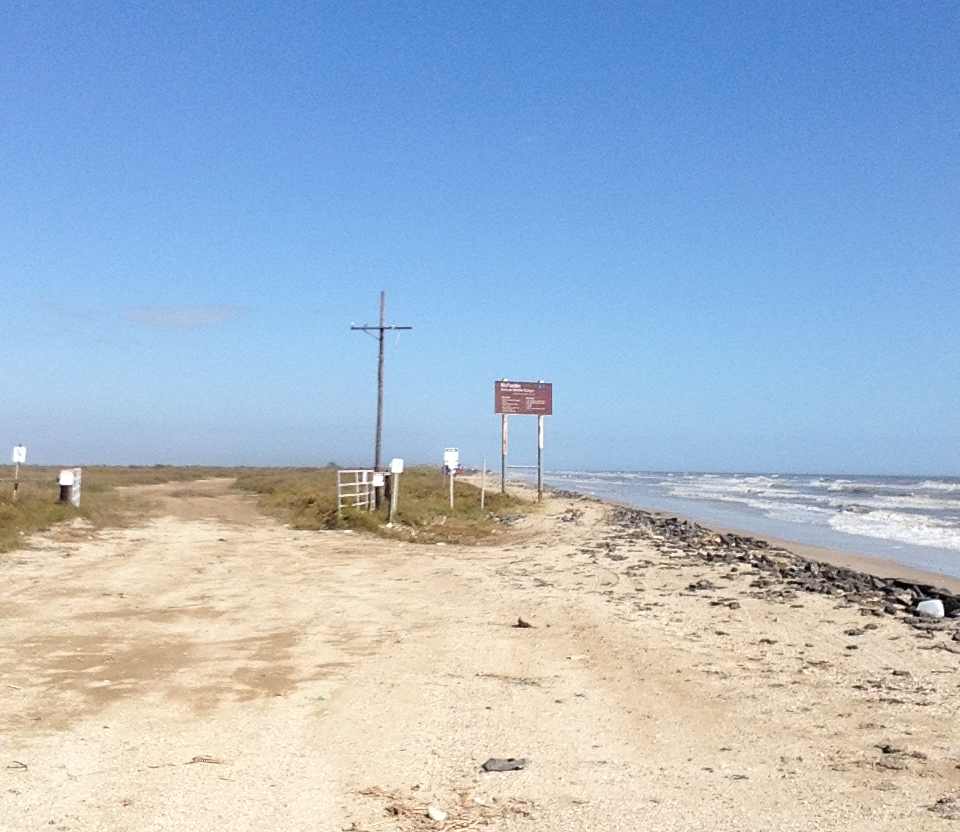
I left on a Sunday, and a strong cold front was due to sweep through in a couple of days.  That, of course, meant that the winds would be out of the southeast, and it would bring warm air out of Mexico.  It was in the 70's, and I decided to see the Gulf of Mexico in all its glory.  I took 124 south from the small town of Winnie to High Island, and there it meets what used to be Highway 87, prior to the street being destroyed by Hurricane Ike.  The highway, right next to the beach, was never rebuilt.  Driving up over a hill, I suddenly see the Gulf of Mexico spread out upon the horizon, and it was an amazing sight.  We live on such a magnificent planet, something so unlike any other planet in the area, and there are times we have to step back and realize what we have here, how gorgeous it is, and how we can add to the beauty, and not take away from it. 


I parked in front of a huge wooden Cross, standing on the beach in memory of those affected by the tragedy.  I decided to leave my work keys in the car, and so I took apart my keychain, left my car keys in the car, and promptly locked it.  Of course, I realized my mistake, and after several seconds of berating myself, I realized that I had left the windows of my car down a little, so maybe it was possible to stick my hand (which didn't work, that hurt) or something else down into the door to unlock it.  I went down the beach looking for trash that had washed up that just might help me.  I found, after a time, the back part of a broken fishing rod (someone was having loads of luck that day), and thought it just might do it.  I returned to the car and, after a little maneuvering, managed to unlock my car.  

So, back to the beach, to the cross, to the stereo sound of waves crashing upon themselves, and upon the shoreline.  To the waterbirds that take flight, long wings and necks  like feathered dinosaurs, flying up and over the water and then back down shore where my walking wouldn't bother them.  To the shells that washed up on shore after so many years of being houses for mollusks, only to become a pathway for fishermen to bring their trucks, their poles, and drive down what was left of the highway to places where they might catch a fish or two.  Yes, back to the beach, and even though the water was cold (I took my shoes off and let the water crash into my toes), it was an amazing place to be.  


On the other side of the beach were giant horses, or that's what they seemed to be, just standing in grassy swampland, waiting to be activated again for the search of oil.  They stand solitary out there, and it reminded me of the all knowing cow that Robert Penn Warren wrote of in All the King's Men, the cow that you pass as you go west, on the train, the one that looks up at you as it's chewing its cud, and you wonder how many people it has seen and how many people have seen it, really seen it, not just passed by without a single thought.  How many fishermen have passed by these oil rigs, not paying any attention to them?  In thousands of years, when the highway and the crosses and the houses and the fishermen have all been blown away by time and wind and wave, the iron horses will stand, and future people will come and stand in front of them and wonder what these great machines saw, and who made them?


A mile east from one cross is another, one that used to be the carrier of telephone wires and cable wires, the voices of countless humans travelling down the beach.  Now, however, a bird perched on it, and next to it, a sign, signifying the McFadden National Wildlife Refuge.  Having walked a mile, from one cross to another, I decided to head back, for I had many miles to go before I got home.  I will, when the time comes, return to the Gulf, and bask in the sunshine and the sound of the water hitting the shore, and see the solitary iron horses, and the crosses and the fishermen.  I loved it.  

It was then time to drive back to Dallas, avoiding the Toll Roads, and, it being the Sunday after Thanksgiving, to stand the heavy traffic on the interstates with all the other people driving back from wherever to their homes to work the next day.  And my car died on me once, and I waited 15 minutes for it to cool down, rest, and then it started back up (it does that when I take road trips, and it'll do it again, I expect, but I can adapt, for now).  I was glad to get back home, to continue this journey.  If you ever get the chance, do head down to the small towns along the Gulf of Mexico.  You'll be glad you did.